
Camille ***** (1936, Greta Garbo, Robert Taylor, Lionel Barrymore, Henry Daniell) – Classic Movie Review 1,985
Greta Garbo received her third Best Actress nomination for the grand 1936 American romantic tragedy film Camille at the 10th Academy Awards.

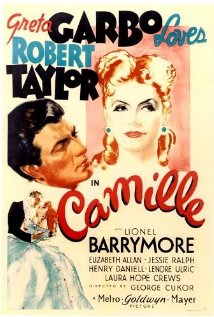
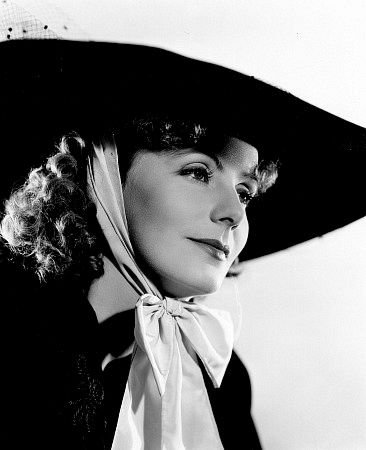
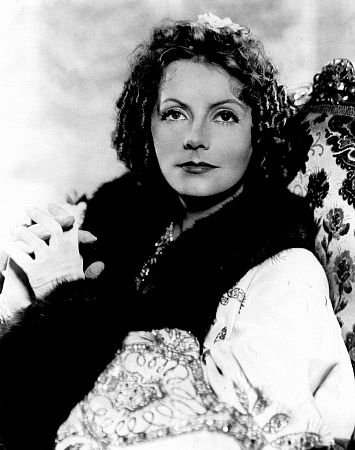
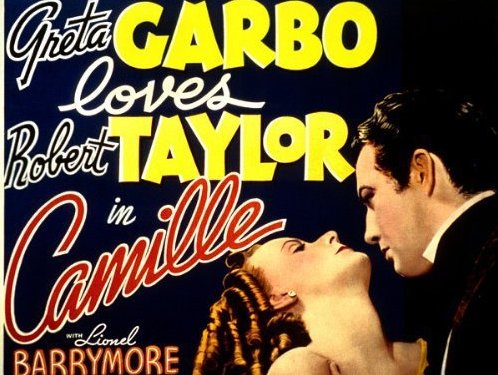
Director George Cukor’s 1936 vintage tragic romance movie Camille stars Greta Garbo, perfectly cast and at her most luminously finest as beautiful Marguerite Gautier, a lovely, well-known courtesan, living in mid-19th century Paris. The screenplay by Frances Marion, James Hilton and Zoe Akins is based on the 1848 novel and 1852 play La Dame aux Camélias by Alexandre Dumas Fils.
After two famous classic silent movie versions in 1921 and 1926, both called Camille and based on the novel La Dame aux Camélias by Alexandre Dumas Fils, finally there is a talkie classic, Camille, released by MGM on December 12, 1936.
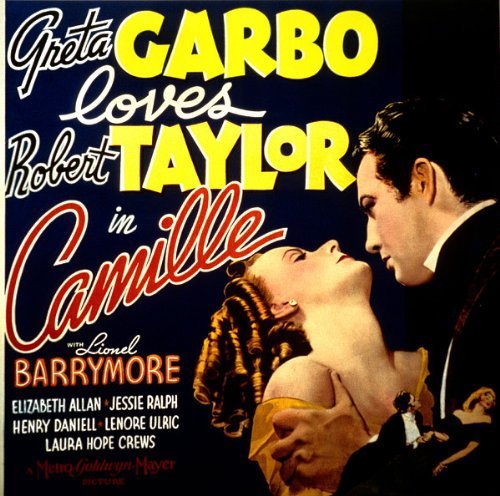
Along with Greta Garbo, the film stars Robert Taylor, Lionel Barrymore, Elizabeth Allan, Jessie Ralph, Henry Daniell, and Laura Hope Crews. It cost $1,486,000 and earned $1,154,000 in North America and $1,688,000 elsewhere, resulting in a profit for MGM of $388,000.
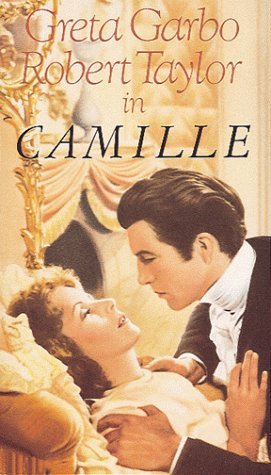
Garbo works her wonders to behold as Alexandre Dumas Fils’s heroine Marguerite Gauthier, an 1840s Parisian lady-of-the-night courtesan, a tart with a heart of gold, who meets and falls deeply in love with the handsome young noble Armand Duval (Robert Taylor), a young man of promise, from a good family but with no great fortune.
But, when Armand’s father Monsieur Duval (Lionel Barrymore) begs her not to marry Armand and ruin his career, she leaves her lover. However, when poverty and terminal illness overwhelm her, Marguerite discovers that Armand has not lost his love for her. And, when she‘s dying of consumption, Marguerite sacrifices herself to prove her true love of Armand.
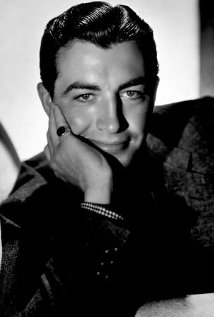
Taylor (real name Spangler Arlington Brugh) is pretty but wooden as the young man who truly loves her; Lionel Barrymore overacts amusingly as Armand’s crusty father, Monsieur Duval; but Henry Daniell is much more stylish as the wicked, callous Baron de Varville, Garbo’s abandoned lover who just wants her.
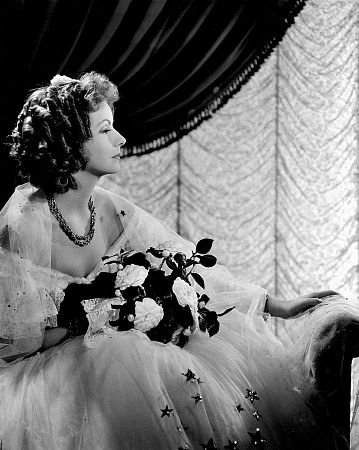
Cukor knows exactly how to direct actors and a supposed ‘woman’s picture’ such as this, and MGM gives it its best shot with the lavish production and the repertory company of busy support players. But it’s all eyes on the great Garbo, moving subtly from passionate romancing to feverish dying. The movie is photographed by Garbo’s trusted cinematographer William H Daniels, who lenses her to look at her loveliest. Throughout her MGM career, Garbo insisted that Daniels was her cinematographer. Garbo received her third Best Actress nomination for Camille at the 10th Academy Awards in 1938, arguably her finest performance (Luise Rainer won for The Good Earth).
In 1930, Garbo received a single nomination for both Anna Christie and for Romance. In 1937, she was nominated for Camille, and in 1939 for Ninotchka.
Also among the cast are Elizabeth Allan, Lenore Ulric, Laura Hope Crews, Rex O’Malley, Jessie Ralph, E E Clive, Phyllis Barry, Lita Chevret and Elspeth Dudgeon.
The 37-year-ol Irving Thalberg died while producing Camille. In post-production, Louis B Mayer appointed as new producer Bernard Hyman, who arranged re-takes, cut some scenes, and re-edited scenes.
[Spoiler alert] Garbo’s last scene was rewritten and reshot three times as Cukor thought it did not feel natural talking that much when you are about to die. In second ending, Camille was on the deathbed and said fewer words, but in the third ending, Camille was even quieter, and just slowly slips away in Armand’s arms. The original death scene is lost.
John Barrymore caught pneumonia and had to give up the role of Baron de Varville to his brother Lionel. But Lionel ended up playing Monsieur Duval with Henry Daniell as Baron de Varville.
Thalberg said to Cukor: ;George, she’s awfully good. I don’t think I’ve ever seen her so good.’ Cukor replied: ‘But Irving, she’s just sitting in an Opera Box.’ ‘She’s relaxed’, said Thalberg. ‘She’s open. She seems unguarded for once.’
Camille celebrated its grand premiere on December 12, 1936, at the new Plaza Theatre in Palm Springs, California.
Camille is directed by George Cukor, runs 109 minutes, is made and released by MGM, is written by Frances Marion, James Hilton and Zoe Akins, based on the 1848 novel and 1852 play La dame aux camélias by Alexandre Dumas Fils, is shot in black and white by William H Daniels and Karl Freund, is produced by Irving Thalberg, Bernard H Hyman and David Lewis, is scored by Herbert Stothart and Edward Ward, and is designed by Cedric Gibbons
Joan Leslie (January 26, 1925 – October 12, 2015)
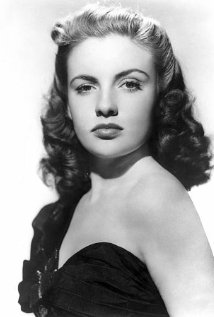
It marks the film debut of Joan Leslie, only 12, as Marie Jeanette: her film career was over at the age of 31, leaving the profession to bring up her twin daughters. She performed under her real name of Joan Brodel, until adopting ‘Joan Leslie’ for High Sierra (1941). She resumed acting after her daughters grew up, mostly in TV, working up to the 1991 TV movie Fire in the Dark.
The cast
The cast are Greta Garbo as Marguerite Gautier, Robert Taylor as Armand Duval, Lionel Barrymore as Monsieur Duval, Elizabeth Allan as Nichette, the Bride, Jessie Ralph as Nanine, Marguerite’s Maid, Henry Daniell as Baron de Varville, Lenore Ulric as Olympe, Laura Hope Crews as Prudence Duvernoy, Rex O’Malley as Gaston, Mabel Colcord as Madame Barjon, Mariska Aldrich as Friend of Marguerite, Wilson Benge as Attendant, Joan Leslie as Marie Jeanette, E E Clive, Phyllis Barry, Lita Chevret, Elspeth Dudgeon, Rex Evans, Dorothy Granger, Russell Hardie, Sam Harris, Sibyl Harris, Olaf Hytten, Fritz Leiber Jr, Edwin Maxwell, Ferdinand Munier, Lionel Pape, Barry Norton, Zeffie Tilbury, Douglas Walton, Eily Maylon, June Wilkins, Howard Wilson, and Daisy Belmore.
Previous film adaptations of the play premiered in 1912, 1915, 1917, 1921 and 1926.
Camille (1921)
Director Ray C Smallwood’s famed 1921 silent version Camille of Alexandre Dumas’s heroine Marguerite Gautier stars Alla Nazimova as the lady-of-the-night with a heart of gold, who is dying of consumption and sacrifices herself to prove her true love of young noble Armand (Rudolph Valentino). The film has survived and is available on DVD and free streaming.
Camille (1926)
Director Fred Niblo’s famed 1926 silent version Camille of Alexandre Dumas’s heroine Marguerite Gautier stars Norma Talmadge as the lady-of-the-night with a heart of gold, who’s dying of consumption and sacrifices herself to prove her true love of young noble Armand (Gilbert Roland). An incomplete 35mm positive print exists in the Raymond Rohauer collection of the Cohen Media Group.
La Dame aux Camélias (1981)
It was remade as the French-language film Lady of the Camelias [La Dame aux Camélias] in 1981 with Isabelle Huppert. It was adapted by Jean Aurenche, Enrico Medioli and Vladimir Pozner, and directed by Mauro Bolognini.
Moulin Rouge! (2001)
And there is also the musical version Moulin Rouge! (2001), directed by Baz Luhrmann, and starring Nicole Kidman and Ewan McGregor.
© Derek Winnert 2014 Classic Movie Review 1,985
Check out more reviews on http://derekwinnert.com/

Recent articles
- Cut ** (2000, Kylie Minogue, Molly Ringwald, Geoff Revell, Frank Roberts, Jessica Napier, Simon Bossell, Geoff Revell, Sarah Kants, Sam Lewis, Stephen Curry, Tiriel Mora) – Classic Movie Review 13,88826 Mar 2026
- The Wanderings of Ivan [La balade d’Ivan] *** (2018, Aram Arakelyan) – Classic Movie Review 13,88623 Mar 2026
- Judge Dredd *** (1995, Sylvester Stallone, Armand Assante, Diane Lane, Max Von Sydow, Rob Schneider, Joan Chen, Jürgen Prochnow) – Classic Movie Review 13,88521 Mar 2026
- Act of Vengeance *** (1986, Charles Bronson, Ellen Burstyn, Wilford Brimley, Hoyt Axton, Robert Schenkkan, Ellen Barkin, Maury Chaykin, Keanu Reeves – Classic Movie Review 13,88421 Mar 2026
- Valentine * (2001, Denise Richards, Marley Shelton, Jessica Capshaw, David Boreanaz, Katherine Heigl) – Classic Movie Review 13,88320 Mar 2026
Recent comments
- The President’s Lady ** (1953, Charlton Heston, Susan Hayward, John McIntire, Fay Bainter) – Classic Movie Review 13,846 | Derek Winnert on The Buccaneer *** (1958, Yul Brynner, Claire Bloom, Charles Boyer, Inger Stevens, Henry Hull, Charlton Heston) – Classic Movie Review 13,844
- Straight Up *** (2019, James Sweeney, Katie Findlay, Dana Drori, James Scully, Tracie Thoms, Betsy Brandt, Randall Park) – Classic Movie Review 13,839 | Derek Winnert on Twinless **** (2025, Dylan O'Brien, James Sweeney, Aisling Franciosi) – Classic Movie Review 13,838
- Phantom Killer ** (1942, Dick Purcell, Joan Woodbury, John Hamilton, Warren Hymer) – Classic Movie Review 13,837 | Derek Winnert on The Sphinx ** (1933, Lionel Atwill, Sheila Terry, Theodore Newton) – Classic Movie Review 13,836
- Detour ***** (1945, Tom Neal, Ann Savage, Claudia Drake, Edmund MacDonald) – Classic Movie Review 1,547 | Derek Winnert on The Last Crooked Mile *** (1946, Don Barry, Ann Savage, Adele Mara, Tom Powers, Sheldon Leonard, Nestor Paiva) – Classic Movie Review 13,834
- Big ***** (1989, Tom Hanks, John Heard, Jared Rushton, Robert Loggia, David Moscow, Mercedes Ruehl, Jon Lovitz, Josh Clark, Kimberlee M Davis, Elizabeth Perkins) – Classic Movie Review 287 | Derek Winnert on 18 Again! *** (1988, George Burns, Charlie Schlatter, Tony Roberts, Anita Morris, Red Buttons, Pauly Shore) – Classic Movie Review 13,815