
The Looking Glass War **½ (1970, Christopher Jones, Ralph Richardson, Anthony Hopkins, Paul Rogers, Pia Degermark, Susan George, Anna Massey) – Classic Movie Review 4,849
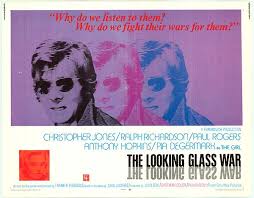
Frank Pierson’s 1970 British thriller film The Looking Glass War is a passable dour and downbeat espionage entertainment. Christopher Jones stars as a young Polish defector who is recruited as a spy by MI6.

Writer-director Frank R Pierson’s 1970 British thriller film The Looking Glass War is a passable dour and downbeat espionage entertainment, but it is hardly an ideal version of John le Carré’s thoughtful 1965 spy novel about the British intelligence agency called the Department and its attempts to infiltrate an agent into East Germany. However, the unglamorous background espionage atmosphere is well presented.
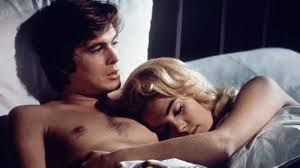
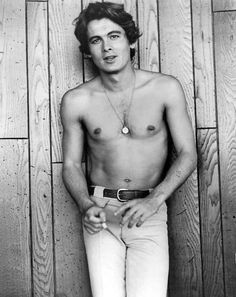
Christopher Jones may be wildly handsome but he is totally miscast, and has little of the air of being either Polish or a secret agent about him. And that is a problem because he is playing both Polish and a secret agent as Fred Leiser, who is a middle-aged naturalised Pole character in the novel, something else Jones doesn’t fit. Actually, he has much more the air of being James Dean about him, which is interesting but is hardly the character, even the one re-written for the movie.
The film turns him into a young Polish defector, just 25, who jumped ship to have asylum in the UK and stay with his pregnant British girlfriend (Susan George). MI6 offers him a chance for UK citizenship in return for agreeing to a dangerous espionage mission behind the Iron Curtain in East Germany.
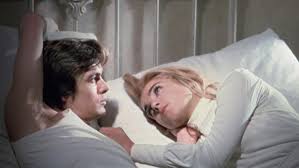
And the wan-looking young Swedish actress Pia Degermark from Elvira Madigan (1967) seems thrown in just for conventional love interest as Anna, a young East German woman Leiser meets and stays with. She is looking for a way out of the country and he falls in love with her. Her attitude to him is oddly ambiguous.
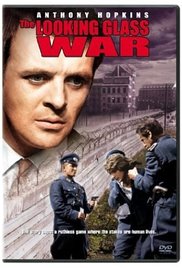
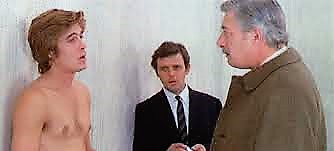
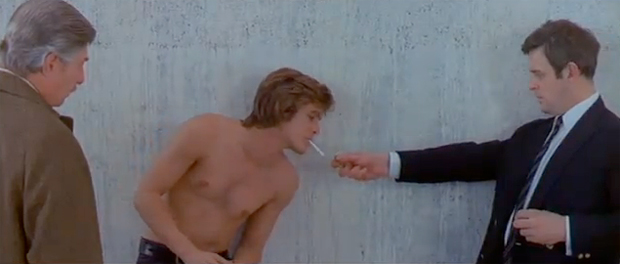
But Ralph Richardson grabs the attention as the cynical, fired-up ageing British Secret Service boss LeClerc, the head of The Department, who sends Jones into East Germany, and so do Anthony Hopkins as the young spy John Avery, the agent assigned to Leiser, and Paul Rogers as Haldane, the veteran intelligence operative for The Department. These three, fully clothed in overcoats and all, approach a half-naked Leiser in an indoor sports court. They are definitely courting him. And he flirts with them a little, agreeing in would be interesting to be a spy, something he’d never done before.
This is the start of the film proper, but by no means the first scene. Early on poor Timothy West has one quick little suspense scene before his character bites the dust. It’s not easy having roles in spy films.
And there is a fine support cast of true Brit or British based acting worthies, including Susan George, Anna Massey as as Avery’s Wife, Ray McAnally, Vivian Pickles, Robert Urquhart, Maxine Audley, Cyril Shaps, Michael Robbins, Timothy West, Frederick Jaeger, Peter Swanwick, Paul Maxwell and Guy Deghy.
Also in the cast are Ernst Walder, Patrick Wright, Sylva Langova, David Scheur, Allan McClelland, John Franklyn, Angela Down, Robert Wilde, Nicholas Stewart, Linda Hedger, Russell Lewis, Mike Reid and Dadina Sagger.
So nothing wrong with the cast then. If only there were more excitement, tension and action in the movie along with all the good acting and the smart talk.
There is an unpleasant scene in the movie where Leiser discovers that his English girlfriend has had an abortion, and he thumps her in the face. It turns out he didn’t care about her but only about his unborn child. Poor Susan George! The women are treated abysmally in this film. Avery is disgusting to his wife (Anna Massey) and LeClerc is disgusting to his wife (Maxine Audley).
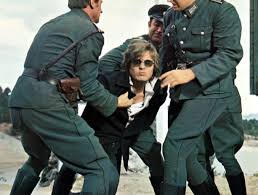
There is another unpleasant scene in the movie where Leiser murders an East German truck driver (Michael Robbins) after rejecting his advances: more homophobia from le Carré. On the other hand, typically, there is much latent homosexuality in the male bonding of Leiser and Avery, as the Brit spy pulls a knife on the Pole, and they embark on an epic man-on-man fighting match. This is followed by an epic night of carousing together when they make up big time. Avery is the only one of the Brit spies who gives a damn about Leiser, and is eventually horrified at his fate, contrived from the start by his disgustingly cynical and incompetent bosses.
The film is properly bleak and nihilistic, and, as a successor to The Spy Who Came in from the Cold, quite without the shadow of a happy ending. So it ends up as a spy entertainment without really being entertaining, No wonder the fantasy James Bond version was more popular.
The key George Smiley character from rival Brit spy organisation The Circus is dropped from this film.
The Looking Glass War is directed by Frank R Pierson, runs 109 minutes, is made by Columbia Pictures Corporation and Frankovich Productions, is released by Columbia Pictures, is written by Frank R Pierson, is shot by Austin Dempster, is produced by M J Frankovich (executive producer) and John Box, is scored by Angela Morley (billed as Wally Stott), and is designed by Terence Marsh.
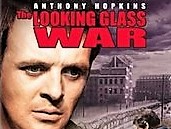
It was released on 2 January 1970 in the UK. It stars Christopher Jones but nowadays they are selling the DVD disc on the strength of Hopkins.
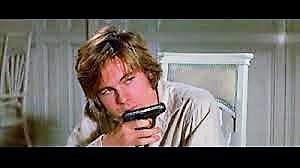
Jones is also the star of an interesting bunch of movies including Chubasco (1967), Wild in the Streets (1968), Three in the Attic (1968) and Ryan’s Daughter (1970). The same year as The Looking Glass War in Europe he also made and Brief Season (1969), also with Pia Degermark.
In real life Jones and Degermark got on real well, romantically, but Jones and Hopkins not so much. Hopkins recalled: ‘It was a very strange film. I enjoyed working with Sir Ralph Richardson, though, and he made me laugh a great deal.’
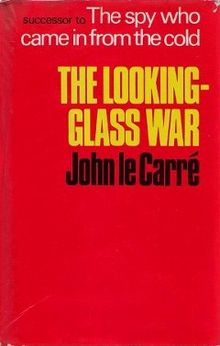
John le Carré’s novel and this film both follow The Spy Who Came in from the Cold, which made a much better movie.
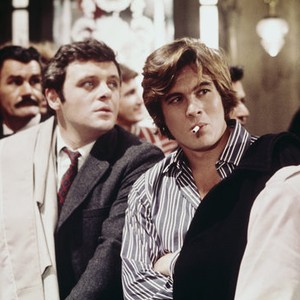
It tells us in the closing credits that it was ‘made at Shepperton Studios, London, England, and on location in Europe’. That was in fact Spain.
Jones’s voice was dubbed, which David Lean did not know when he hired him on the strength of this film for Ryan’s Daughter (1970) and offered him a then massive $500,000 for the lead role of British military officer, but Jones’ voice was dubbed there as well. Jones was burned out, suffered a nervous breakdown and turned his back on movies and acting. He made one other film, Mad Dog Time, in 1996, just seven films in all.
Jones’s dubbed voice is a fine vocal performance, consistently ‘Polish’ sounding and dramatically effective, while Jones himself is giving what turns out to be silent film acting, though he makes much of it, in a living and breathing athletic, physical performance. The score, on the other hand, is an irritant, jarring, out of place and insistently repetitive, apparently written by Angela Morley but billed as Wally Stott.
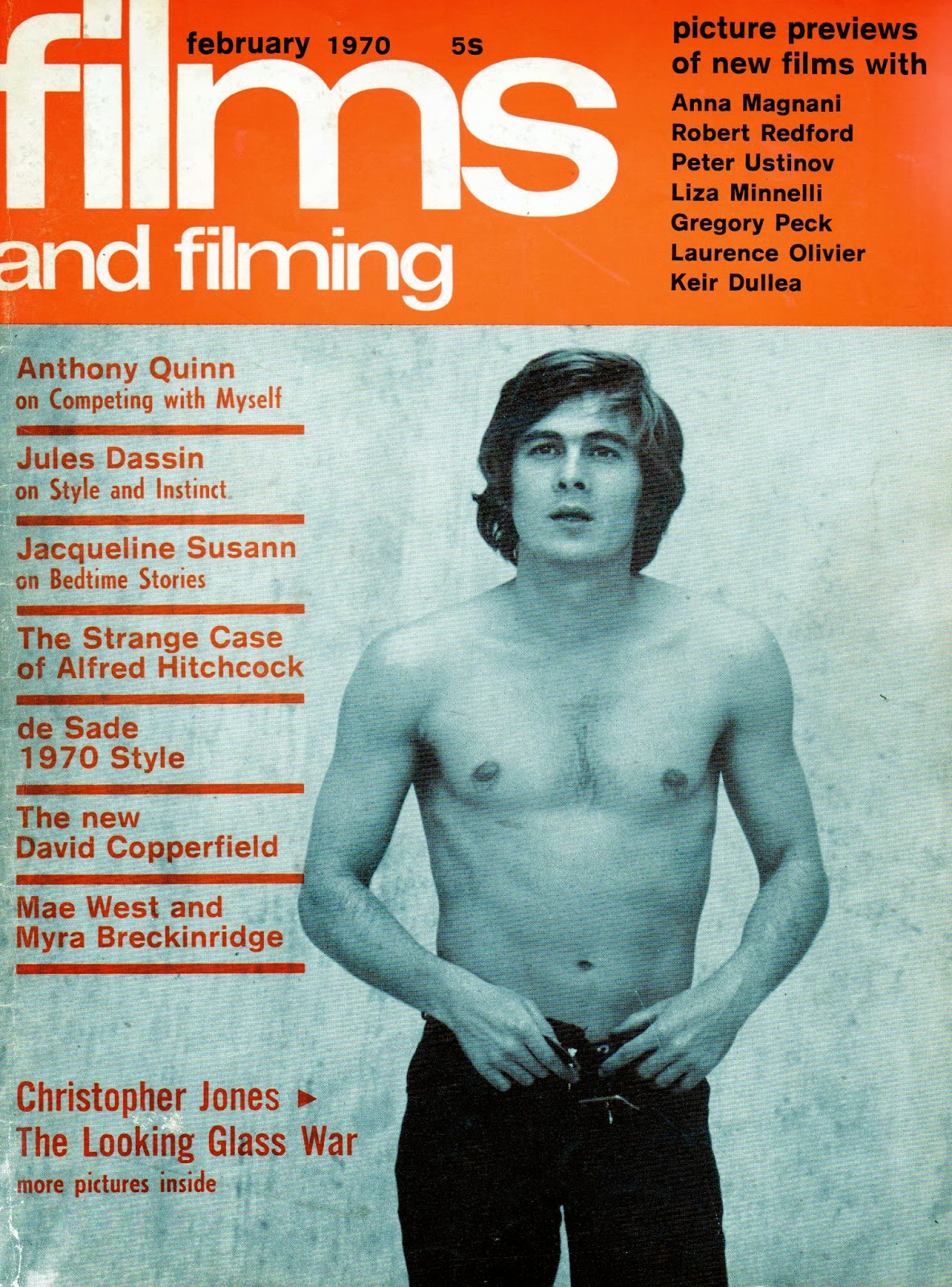
RIP Christopher Jones, who died of cancer onaged 72.
© Derek Winnert 2017 Classic Movie Review 4,849
Check out more reviews on http://derekwinnert.com

Recent articles
- Frankenstein ** (2025, Oscar Isaac, Jacob Elordi, Mia Goth, Felix Kammerer, Christoph Waltz) – Classic Movie Review 13,86904 Mar 2026
- A Better Way to Die ** (2000, Andre Braugher, Scott Wiper, Lou Diamond Phillips, Natasha Henstridge, Joe Pantoliano) – Classic Movie Review 13,86804 Mar 2026
- A Better Tomorrow ***** (1986, Ti Lung, Leslie Cheung, Chow Yun-fat, Emily Chu, Waise Lee) – Classic Movie Review 13,86704 Mar 2026
- Hard Boiled **** (1992, Chow Yun-fat, Tony Leung, Teresa Mo, Philip Chan, Anthony Wong, Philip Kwok, Bowie Lam, Kwan Hoi-san) – Classic Movie Review 13,86603 Mar 2026
- Hammer the Toff *** (1952, John Bentley, Patricia Dainton, Valentine Dyall) – Classic Movie Review 13,86501 Mar 2026
Recent comments
- The President’s Lady ** (1953, Charlton Heston, Susan Hayward, John McIntire, Fay Bainter) – Classic Movie Review 13,846 | Derek Winnert on The Buccaneer *** (1958, Yul Brynner, Claire Bloom, Charles Boyer, Inger Stevens, Henry Hull, Charlton Heston) – Classic Movie Review 13,844
- Straight Up *** (2019, James Sweeney, Katie Findlay, Dana Drori, James Scully, Tracie Thoms, Betsy Brandt, Randall Park) – Classic Movie Review 13,839 | Derek Winnert on Twinless **** (2025, Dylan O'Brien, James Sweeney, Aisling Franciosi) – Classic Movie Review 13,838
- Phantom Killer ** (1942, Dick Purcell, Joan Woodbury, John Hamilton, Warren Hymer) – Classic Movie Review 13,837 | Derek Winnert on The Sphinx ** (1933, Lionel Atwill, Sheila Terry, Theodore Newton) – Classic Movie Review 13,836
- Detour ***** (1945, Tom Neal, Ann Savage, Claudia Drake, Edmund MacDonald) – Classic Movie Review 1,547 | Derek Winnert on The Last Crooked Mile *** (1946, Don Barry, Ann Savage, Adele Mara, Tom Powers, Sheldon Leonard, Nestor Paiva) – Classic Movie Review 13,834
- Big ***** (1989, Tom Hanks, John Heard, Jared Rushton, Robert Loggia, David Moscow, Mercedes Ruehl, Jon Lovitz, Josh Clark, Kimberlee M Davis, Elizabeth Perkins) – Classic Movie Review 287 | Derek Winnert on 18 Again! *** (1988, George Burns, Charlie Schlatter, Tony Roberts, Anita Morris, Red Buttons, Pauly Shore) – Classic Movie Review 13,815