
The Old Dark House ****½ (1932, Boris Karloff, Melvyn Douglas, Charles Laughton, Raymond Massey, Gloria Stuart, Ernest Thesiger, Eva Moore, Lilian Bond, Brember Wills, Elspeth Dudgeon) – Classic Movie Review 1,036
Ernest Thesiger: ‘My sister was on the point of arranging these flowers’ (chucks them in the fire). James Whale’s brilliant, renowned and honoured 1932 old dark comedy chiller film The Old Dark House is adapted from J B Priestley’s novel Benighted.
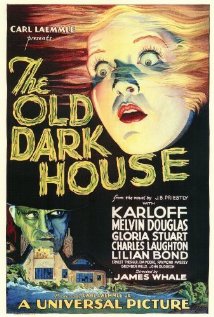
‘Beware the night!’
Director James Whale’s quite brilliant and deservedly renowned and honoured 1932 old dark comedy chiller film The Old Dark House is adapted from J B Priestley’s 1927 novel Benighted (published in America as The Old Dark House). Smart, sophisticated cynicism is the order of the day. It’s a Gothic comedy, not a horror film at all.
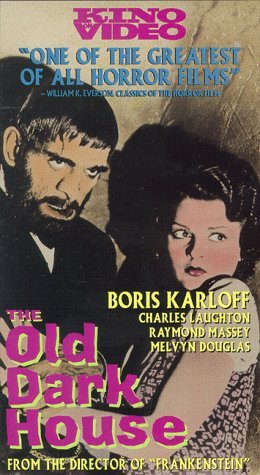
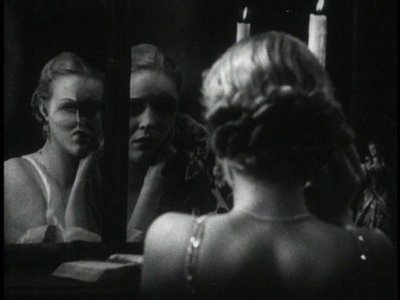
In the film’s story, two carloads of travellers (first Raymond Massey, Melvyn Douglas and Gloria Stuart, then later Charles Laughton and Lillian Bond) beg for shelter from a desperately driving storm at the Femm family gloomy mansion in Wales.
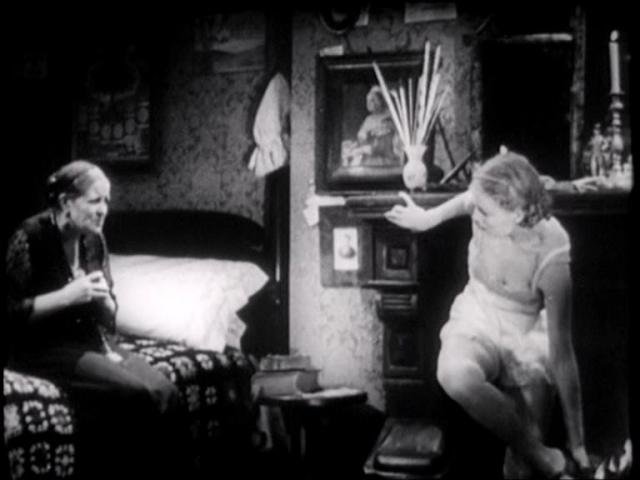
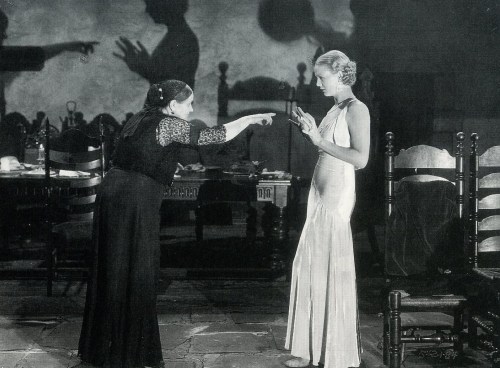
Ernest Thesiger and Eva Moore also star as the crazy Horace and Rebecca Femm, the host of the old dark house and his religious fanatic sister, he splendidly camp and skeletal, she near-deaf and spectacularly aggressive and inhospitable (‘No beds, they can’t have beds’ and ‘They can’t come in!’).
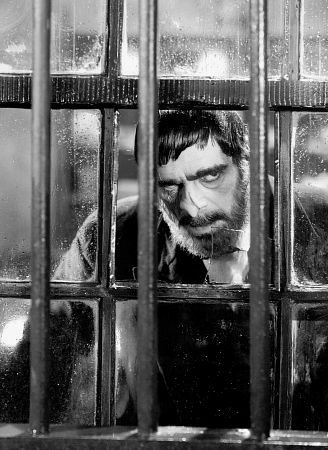
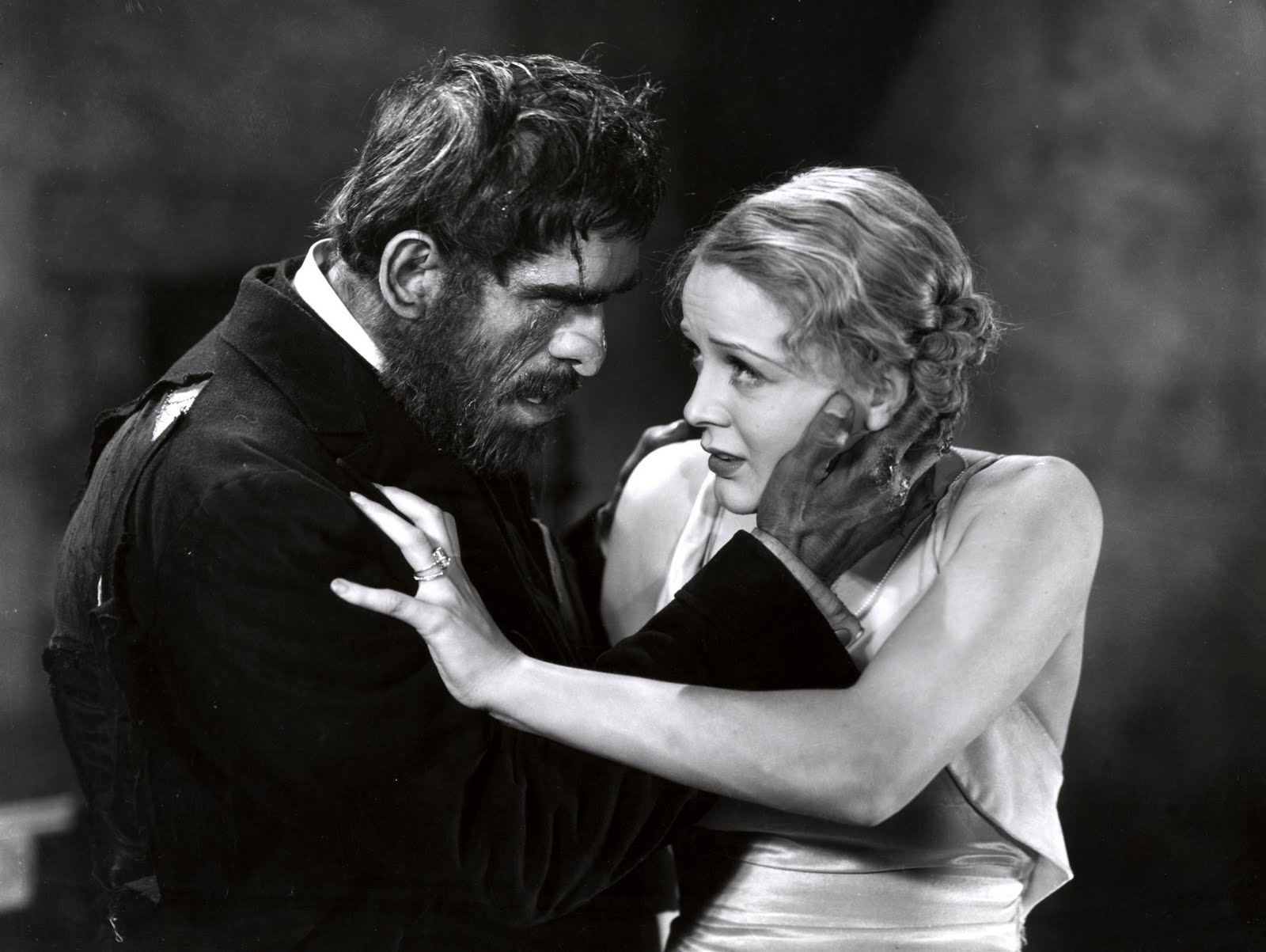
Crazier still is Brember Wills as the mad brother Saul they have locked away upstairs, a psychotic pyromaniac, while wonderful Boris Karloff, now a top-billed star since his triumph Whale’s Frankenstein the previous year (during which time he had done another eight movies!), is their creepy mute, bearded butler Morgan, though infuriatingly this means he has no lines, but he looms and menaces to perfection. Morgan, Horace declares, is ‘an uncivilised brute. Sometimes he drinks heavily. A night like this will set him going and once he’s drunk he’s rather dangerous.’
It is a ripe cast indeed, mostly imported from Britain (apart from Douglas and Stuart, whose ‘English’ accents leave something to be desired), along with inspired director Whale, who had just scored such a monster triumph with his 1931 film Frankenstein. Talking accents, Charles Laughton’s tones as rich bluff Yorkshireman Sir William Porterhouse seem well dodgy, but he is actually from Yorkshire, playing a character that is basically himself. His acting is pretty ripe, too, but it is that kind of show. He is giving what he was probably asked to do.
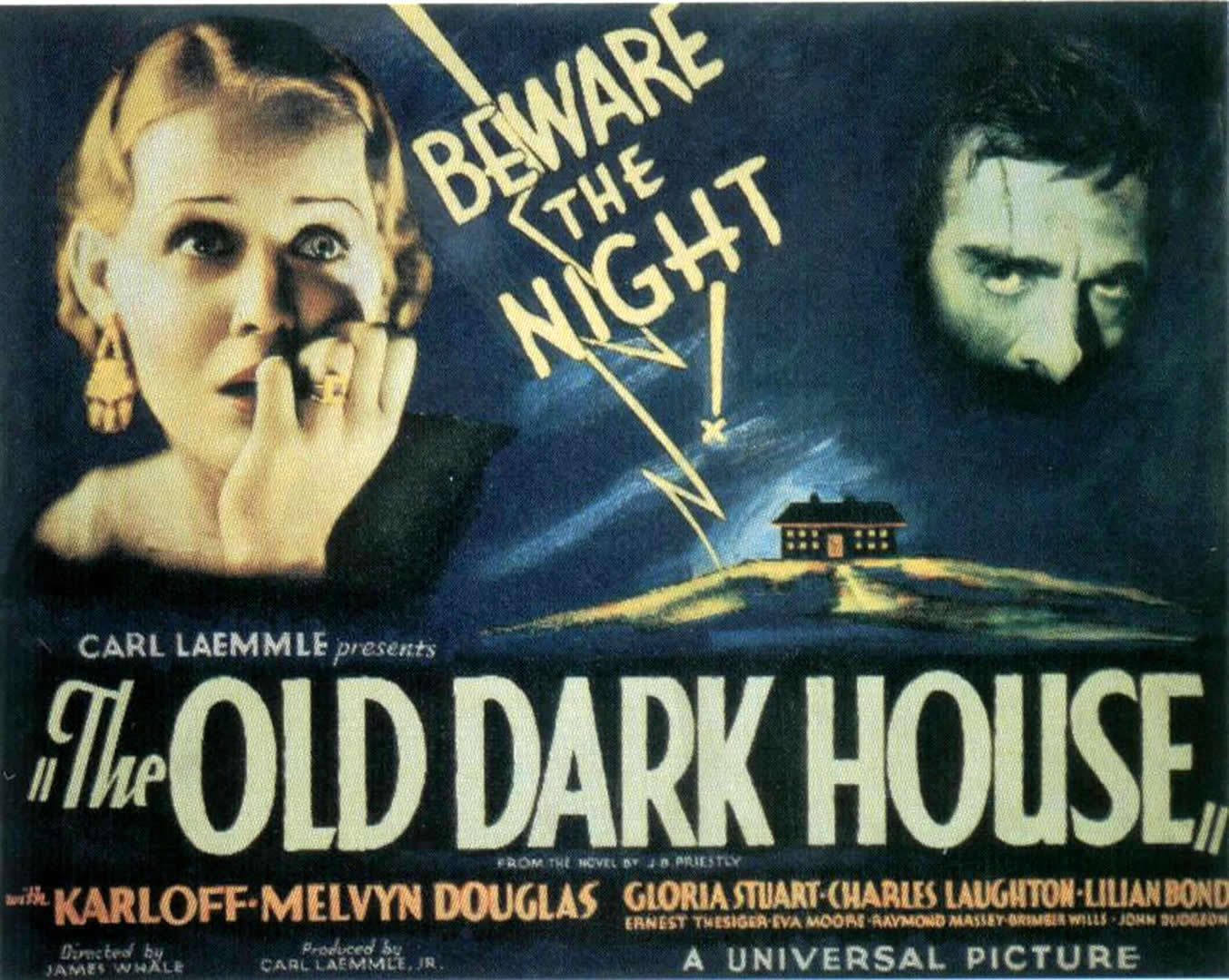
Benn W Levy and R C Sherriff’s screenplay strips Priestley’s novel of its social comment, but keeps its spirit and witty dialogue and adds some shocks to keep it in the horror film area. Jokily (though quite why?), an actress (Elspeth Dudgeon) is cast as a croaky, whispy-bearded, 102-year-old bedridden Sir Roderick Femm, but she is credited as John Dudgeon. Her one scene is a peach. Why? is not a question to ask of this film. It has no story and makes no sense, and its nonsense is what makes it so amusing.
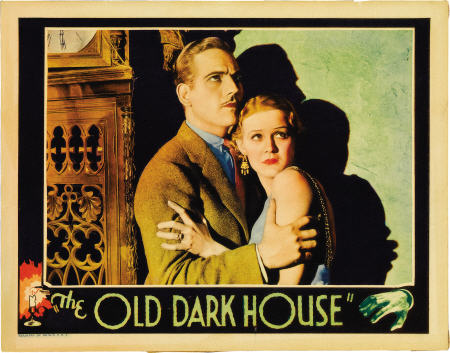
This flamboyant, bizarre and blackly comic story works on screen perfectly, just like a really weird dream, or maybe even a nightmare. Thesiger has many of the best lines: ‘My sister was on the point of arranging these flowers’ (chucks them in the fire)… and ‘We make our own electric light here, [lights flicker and extinguish], and we are not very good at it. Pray, don’t be alarmed if they go out altogether.’ Oh, and ‘Have a potato’. It isn’t actually a great line, but Thesiger turns the repeated line into a comedy gem. It’s the way he tells it.
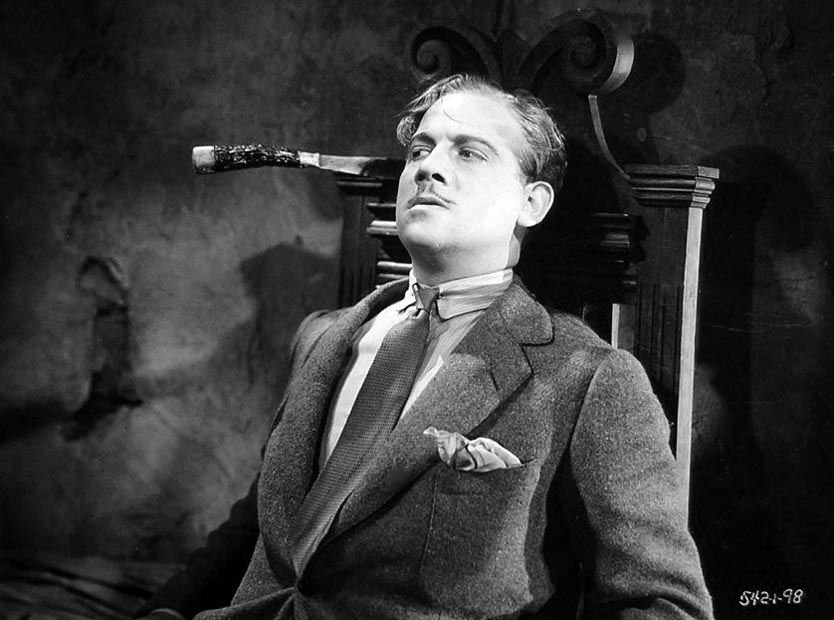
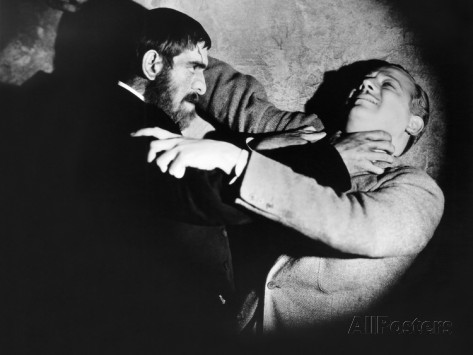
There is an excellent climax, featuring a battle royal between Brember Wills as the mad brother Saul and the film’s supposed hero Roger Penderel (Melvyn Douglas), a terrible, smug letch who has nicked Charles Laughton’s gold-digging chorus girl companion Lillian Bond (though, to be fair, it is made very clear that Laughton isn’t interested in her sexually). Saul decides he wants to kill Roger Penderel, initially wanting to stab him to death, but then giving in to his pyromaniac instincts and wanting to burn the whole house down. He rushes upstairs and sets fire to the curtains. It’s the second time the house is threatened. Initially it is feared it will wash away in the floods of water from the tempest level storm.
[Spoiler alert] In the heat of battle, the heat mainly from the burning curtains, Saul and Roger Penderel fall spectacularly to their apparent deaths from the balcony. But Roger is found alive by Gladys: ‘He’s alive, ALIVE, I tell you.’ This is obviously a cheeky homage to Whale’s Frankenstein (1931), in which Dr Henry Frankenstein famously exclaims: ‘It’s alive! It’s alive! It’s moving, it’s alive! It’s ALIVE!” on animating his creature.
Disappointingly, we don’t see anyone actually putting out the huge fire on the landing, but it is implied that Morgan the butler saves the day after he breaks out of the kitchen and frees Margaret and Gladys from the cupboard they are locked in. By morning, all’s well, and it all ends in an unconvincing embrace, an oddly heterosexual climax to a rich and strange movie.
Ernest Thesiger and Eva Moore as Horace and Rebecca Femm are definitely the stars of the show, the hit turns, with Brember Wills and Elspeth Dudgeon the star character actors. It says a lot that they manage to put Melvyn Douglas, Raymond Massey, Charles Laughton and even Boris Karloff in the shade, good though they are.
The Old Dark House was previewed in the US early July 1932 and all nine New York City daily newspapers reviewed the film positively. It was booked for three weeks at the Rialto Theatre in New York City, but after starting well in the first week of release audience turn-out dropped to less than half in its second week through negative word of mouth and the film was pulled after ten days.
However, the film did well in England and broke house records at London’s Capitol Theatre. It was re-issued in cinemas in 1939 but for many years it was considered a lost film.
Universal Studios lost the rights to the original story in 1957 and it was remade in a poor, updated version by director William Castle in 1962 for Hammer, The Old Dark House (release in 1963), with Tom Poston, Janette Scott and Robert Morley.
The Old Dark House is directed by James Whale, runs 72 minutes, is made and released by Universal Pictures, is written by Benn W Levy and R C Sherriff (uncredited), based on J B Priestley’s novel Benighted, is shot in black and white by Arthur Edeson, is produced by Carl Laemmle Jr, is scored by David Broekman, Bernhard Kaun and Heinz Roemheld, and is designed by Charles D Hall.
Release date: October 20, 1932.
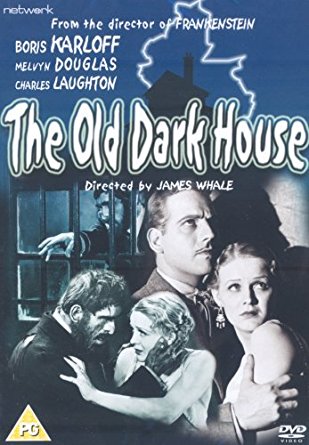
The cast of ten are Boris Karloff (billed as ‘KARLOFF’) as Morgan, the Femm family’s alcoholic mute butler, Melvyn Douglas as war veteran Roger Penderel, Raymond Massey as Philip Waverton, Gloria Stuart as Margaret Waverton, Philip’s wife, Charles Laughton as Sir William Porterhouse, Lilian Bond as chorus girl Gladys DuCane Perkins, Sir William’s girlfriend, Ernest Thesiger as Horace Femm, the host of the house, Eva Moore as Rebecca Femm, Horace’s near-deaf religious fanatic sister, Brember Wills as the pyromaniac Saul Femm, brother of Horace and Rebecca, and Elspeth Dudgeon as Sir Roderick Femm (billed as ‘John Dudgeon’), the 102-year-old father of Horace, Rebecca and Saul.
Dudgeon was supposedly cast because Whale could not find a male actor who looked old enough for the role.
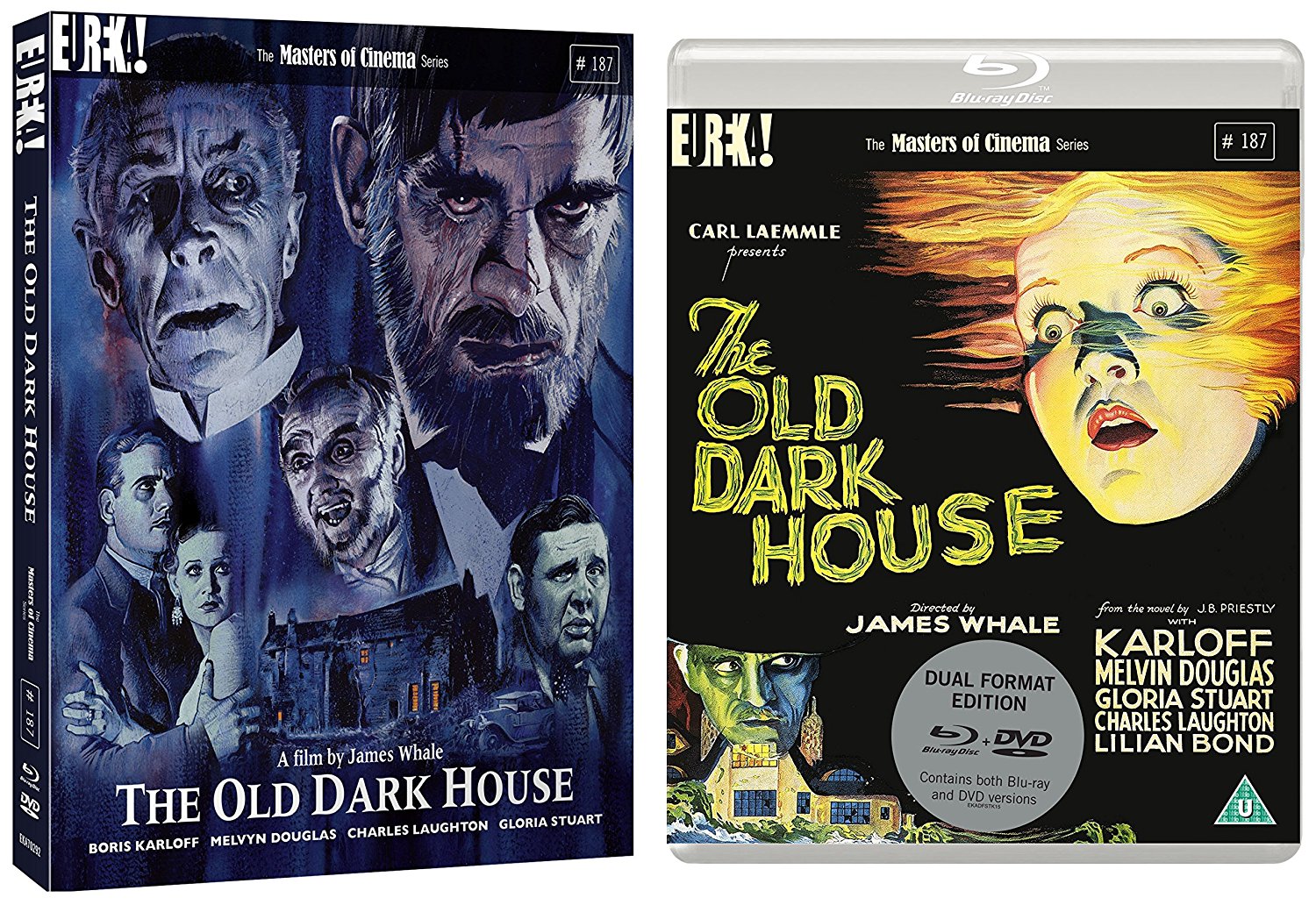
Director Curtis Harrington helped to prevent The Old Dark House from becoming a lost film, finding a print of the film in the vaults of Universal Studios in 1968 and persuading the George Eastman House film archive to finance a new duplicate negative.
Massey and Karloff’ never filmed together again, but Massey play Karloff’s Broadway role in Arsenic and Old Lace (1944).
James Whale
James Whale is notably the director of Journey’s End (1930), Waterloo Bridge (1931), Frankenstein (1931), The Invisible Man (1933), The Bride of Frankenstein (1935), Show Boat (1936) and The Man in the Iron Mask (1939). Ian McKellen plays him in a biopic, Gods and Monsters (1998).
Whale is also the director of The Impatient Maiden (1932), The Kiss Before the Mirror (1933), By Candlelight (1933), One More River (1934), Remember Last Night? (1935), The Road Back (1937), The Great Garrick (1937), Sinners in Paradise (1938), Wives Under Suspicion (1938), Port of Seven Seas (1938), Green Hell (1940) and They Dare Not Love (1941).
http://derekwinnert.com/frankenstein-classic-film-review/
http://derekwinnert.com/the-bride-of-frankenstein-classic-film-review-32/
http://derekwinnert.com/gods-and-monsters-classic-film-review-264/
© Derek Winnert 2014 Classic Movie Review 1,036
Check out more reviews on http://derekwinnert.com/

Recent articles
- Judge Dredd *** (1995, Sylvester Stallone, Armand Assante, Diane Lane, Max Von Sydow, Rob Schneider, Joan Chen, Jürgen Prochnow) – Classic Movie Review 13,88521 Mar 2026
- Act of Vengeance *** (1986, Charles Bronson, Ellen Burstyn, Wilford Brimley, Hoyt Axton, Robert Schenkkan, Ellen Barkin, Maury Chaykin, Keanu Reeves – Classic Movie Review 13,88421 Mar 2026
- Valentine * (2001, Denise Richards, Marley Shelton, Jessica Capshaw, David Boreanaz, Katherine Heigl) – Classic Movie Review 13,88320 Mar 2026
- High Flight ** (1957, Ray Milland, Bernard Lee, Kenneth Haigh, Anthony Newley, Helen Cherry, Leslie Phillips) – Classic Movie Review 13,88220 Mar 2026
- Linda *** (1960, Carol White, Alan Rothwell, Cavan Malone, Edward Cast) – Classic Movie Review 13,88119 Mar 2026
Recent comments
- The President’s Lady ** (1953, Charlton Heston, Susan Hayward, John McIntire, Fay Bainter) – Classic Movie Review 13,846 | Derek Winnert on The Buccaneer *** (1958, Yul Brynner, Claire Bloom, Charles Boyer, Inger Stevens, Henry Hull, Charlton Heston) – Classic Movie Review 13,844
- Straight Up *** (2019, James Sweeney, Katie Findlay, Dana Drori, James Scully, Tracie Thoms, Betsy Brandt, Randall Park) – Classic Movie Review 13,839 | Derek Winnert on Twinless **** (2025, Dylan O'Brien, James Sweeney, Aisling Franciosi) – Classic Movie Review 13,838
- Phantom Killer ** (1942, Dick Purcell, Joan Woodbury, John Hamilton, Warren Hymer) – Classic Movie Review 13,837 | Derek Winnert on The Sphinx ** (1933, Lionel Atwill, Sheila Terry, Theodore Newton) – Classic Movie Review 13,836
- Detour ***** (1945, Tom Neal, Ann Savage, Claudia Drake, Edmund MacDonald) – Classic Movie Review 1,547 | Derek Winnert on The Last Crooked Mile *** (1946, Don Barry, Ann Savage, Adele Mara, Tom Powers, Sheldon Leonard, Nestor Paiva) – Classic Movie Review 13,834
- Big ***** (1989, Tom Hanks, John Heard, Jared Rushton, Robert Loggia, David Moscow, Mercedes Ruehl, Jon Lovitz, Josh Clark, Kimberlee M Davis, Elizabeth Perkins) – Classic Movie Review 287 | Derek Winnert on 18 Again! *** (1988, George Burns, Charlie Schlatter, Tony Roberts, Anita Morris, Red Buttons, Pauly Shore) – Classic Movie Review 13,815